It is the question we hear more than almost any other, usually said a little apologetically. My hair is so thin. There is nothing to work with. Can I even do this? Yes. Fine hair is not a disqualifier. What matters is the method, the weight, and the stylist knowing how to work with the hair you actually have instead of the hair the tutorial had.
By Brilyn Fink, Owner & Creative Director · Updated October 3, 2026
Types of hair extensions for fine, thin hair
Not every type of extension treats fine hair the same way. The difference is how the hair attaches and where the weight sits. Here is how the common types compare, including the ones we do not offer.
| Type | How it attaches | On fine or thin hair |
|---|---|---|
| IBE: Invisible Bead Extensions (hand-tied wefts on a bead row) | Wefts stitched onto a row of silicone-lined beads. No glue, no tape, no heat. | Weight is spread across the whole row. Our usual choice for length and fullness on finer hair, sized lighter. |
| Keratin tips (k-tips, also called fusion) | Small keratin bonds fused to individual strands. | Placed strand by strand, so it suits fine areas, the part, and precise blending. |
| Tape-ins | Adhesive tabs that sandwich a thin slice of your hair. | They lie flat, but they are held on with adhesive. We do not offer them. |
| Clip-ins | Wefts with small clips you put in and take out at home. | Temporary, for an occasion. We do not install them. |
For the full side-by-side, see tape-in vs. hand-tied vs. k-tip extensions, and for pricing, what hair extensions cost in Pittsburgh.
Why fine hair gets turned away
Most of the bad stories you have heard came from a mismatch. Somebody put a heavy install on hair that could not carry it, and the weight did what weight does. It pulled. When too much hair is anchored to too small a section, the tension goes straight to the root, and that is where damage and slipping start.
So the shortcut a lot of stylists take is to just say no to fine hair. It is easier than doing the work of sizing it correctly. That is a limitation of the approach, not a limitation of your hair.
What makes a fine hair install work
Three things, and they all get decided before a single weft goes in. The first is weight. Fine hair needs a lighter weft, and less of it. Coverage comes from placing hair thoughtfully, not from packing more in, and a well-placed lighter install reads fuller than a heavy one that is sliding.
The second is distribution. Instead of loading everything onto a couple of anchor points, the weight gets spread across the row so no single section is ever strained. That is the whole idea behind the IBE (Invisible Bead Extensions) method we use. There is no glue, no tape, and no tension sitting on your scalp.
The third is placement. Fine hair shows everything, so the rows have to sit where your natural hair can cover them through movement, ponytails, and whatever your hair does when you flip it. That is a judgment call made on your head, in the chair, not from a chart.
What to actually expect
You are going to get length and noticeably more body. What you are not going to get on day one is the density of somebody who started with twice your hair, and any stylist who promises that is setting you up to be disappointed.
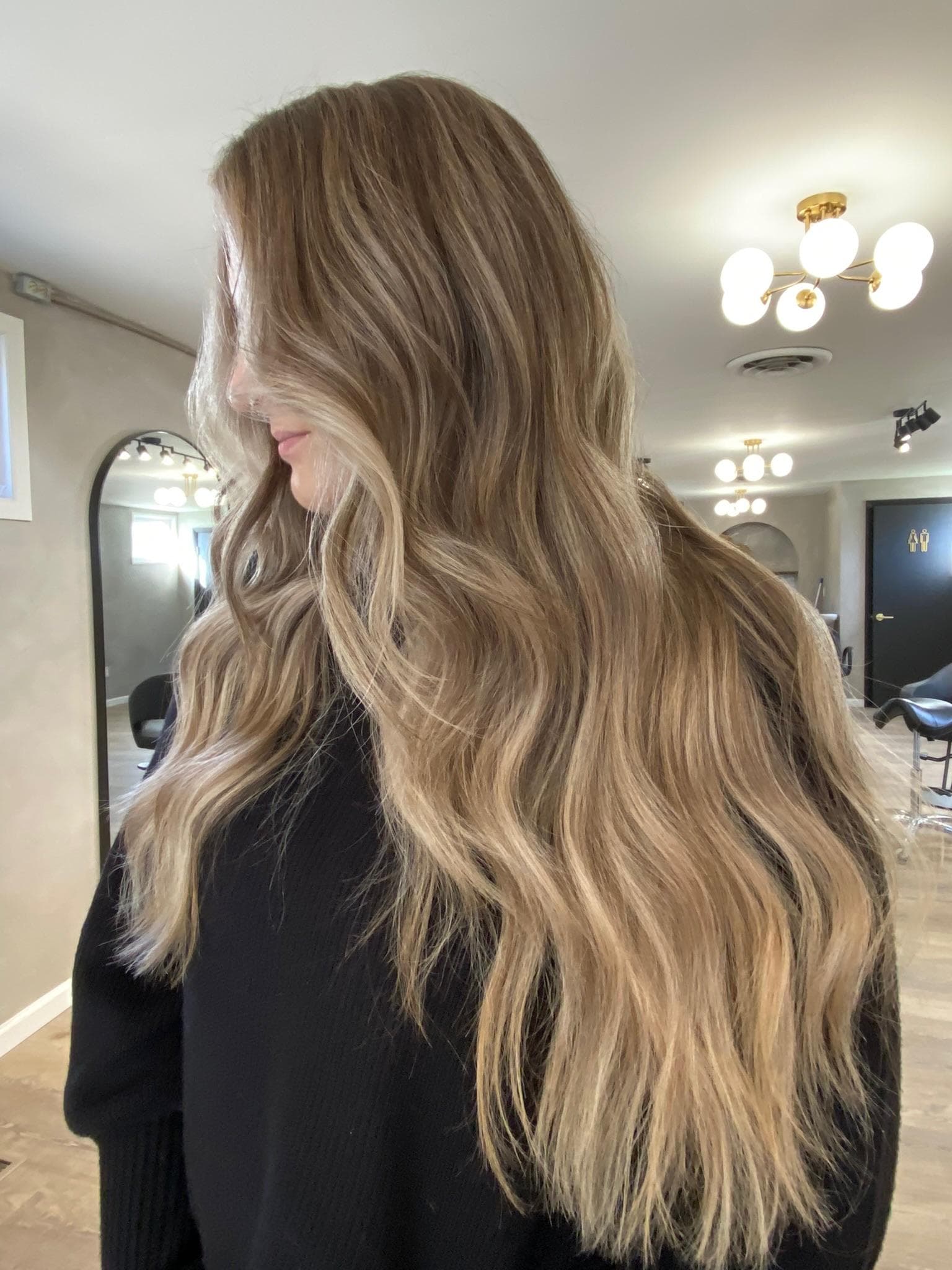
The honest version is better anyway. Fine hair with a properly sized install tends to look the most natural of anybody, because there is nothing to hide. Nothing is bulky, nothing is fighting your hair, and it moves like it grew that way.
Keeping it healthy underneath
The care is the same as any install, and it matters more when your hair is fine. Brush from the ends up with a loop brush, sleep with it loosely braided or tied so it is not tangling all night, and keep oils and heavy conditioners off the beads.
And come in for your move-ups. As your hair grows the rows need to be moved back up toward the root, generally every eight to ten weeks. Staying on that schedule is the single biggest thing protecting your natural hair, because nothing ever gets the chance to tangle or pull. There is more on how damage actually happens if you want the full picture.
Choosing the right hair extensions for fine hair
Not every method suits delicate hair, and that is the part worth slowing down on. The best hair extensions for fine hair are the ones that spread their weight instead of concentrating it, sit flat and hidden against the scalp, and can be maintained on a regular schedule so nothing ever tugs. That is why we lean on IBE, our hand-tied bead method, for adding length and fullness on finer hair, and use keratin tips where the hair is finest and the blend has to be exact. It is not about the most hair you can add, it is about the most hair your hair can carry comfortably and invisibly.
Thin on top? What extensions can and cannot do
Extensions are anchored in the hair around the sides and back of your head, below the crown. That is where they add length and fullness. They do not add coverage at the part or on top of the head, because there has to be enough of your own hair above a row to hide it. If the thinning you are worried about is on top, say so at the consultation. We would rather tell you plainly what will help than sell you an install that does not solve the thing you came in for.
One thing to watch for: we are currently getting certified in mesh integration, a method made for thinning at the top. More on that soon.
Start with the consultation
This is genuinely the part that decides everything. We look at your density, your growth pattern, your natural texture, and what you actually want the end result to be, then match the method and the weight to that. Consultations are free, and it is a real conversation, not a sales pitch. If your hair is not ready, we will tell you that too.
Common questions
- What type of hair extensions are best for thin hair?
- The ones that spread their weight instead of loading it onto a few points, and that use no glue or tape. For most fine hair that is IBE (Invisible Bead Extensions), a hand-tied weft on a bead row, sized lighter than a standard install. Keratin tips, placed strand by strand, are the choice for fine areas, the part, and precise blending. The right answer for your head is decided at a consultation, not from a chart.
- Can you get extensions on thin, fine hair?
- Yes. Fine hair is not a disqualifier. It needs a lighter weft, less of it, weight spread across the row, and placement your own hair can cover. If your hair is not ready for extensions, we will tell you that at the consultation.
- Can extensions help hair that is thin on top of the head?
- Extensions are anchored in the hair around the sides and back of your head, below the crown. They add length and fullness there. They do not add coverage at the part or the crown. We are currently getting certified in mesh integration, a method made for thinning at the top, with more on that soon. If the thinning is on top, tell us at the consultation so we can be honest about what will and will not help.
- How often do extensions need to be moved up?
- IBE rows are moved up about every 8 to 10 weeks as your hair grows. Keratin tips are removed and re-set every 3 to 5 months. Staying on schedule matters more on fine hair, because it keeps anything from tangling or pulling at the root.
- Will extensions make my thin hair fall out?
- Not when they are sized and installed correctly. Damage comes from too much weight on too small a section, skipped move-ups, or pulling them out at home. When you do take them out you will see a collection of shed hair, which is the 50 to 100 strands everybody loses daily held in place by the bead instead of falling out in your brush. It is not extra loss.
- How much fuller will my hair actually look?
- More than you expect, and less than a heavy install on thick hair. Fine hair gets its best result from a lighter, well-placed install that blends completely rather than one that tries to force density. We will show you what is realistic at the consultation.
- Can people tell I am wearing them?
- That is the whole point of the method. There is no tape, no glue, and no exposed hardware, so there is nothing to see when your hair moves or goes up. On fine hair, correct placement is what makes it invisible.